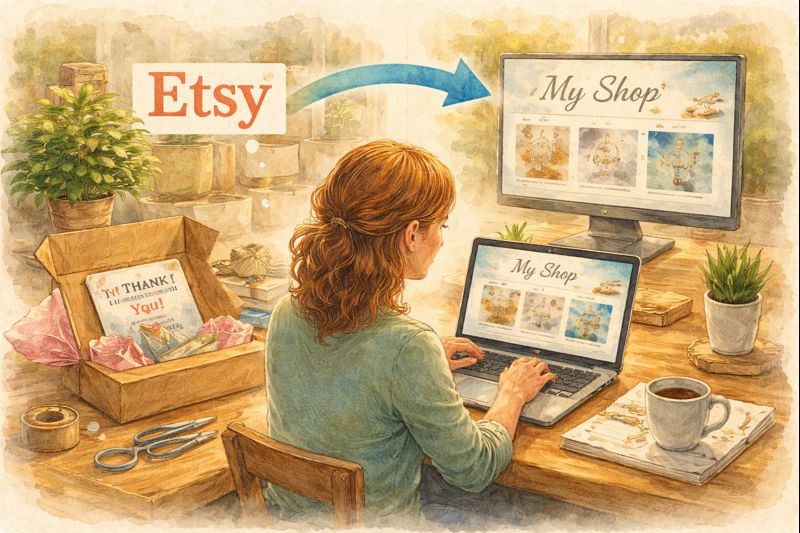
How to Move From Etsy to Your Own Website Without Breaking the Rules

Many creative entrepreneurs start their business journey on Etsy. It’s a great platform with built-in traffic and easy setup, but over time, many sellers realize they want more control, fewer fees, and the freedom to fully own their brand.
Naturally, the next step is building your own website. But here’s the million-dollar question: Can you tell your Etsy customers to follow you there?
The short answer: Not directly. Let’s break it down.
Etsy’s Rules on Directing Customers Away
Etsy’s Terms of Use and Seller Policy are very clear:
You cannot use Etsy’s internal messaging system (Convos) to tell buyers to shop elsewhere.
You cannot use customer emails collected through Etsy orders to send outside promotions.
In Etsy’s eyes, the customers you gain on their platform are Etsy’s customers, not yours—at least until they willingly join your own list or community. Violating these policies can lead to suspension or even permanent closure of your Etsy shop.
What You Can Do to Transition Customers
Just because Etsy limits direct outreach doesn’t mean you’re stuck. There are smart, ethical ways to guide your customers to your new website.
1. Use Packaging Inserts
Every order is a golden opportunity. Slip in a thank-you card, postcard, or flyer with your website link, social media handles, or a special invitation to your email list.
Example: “Thanks for shopping handmade! Discover more designs at YourWebsite.com and join my VIP list for first access to new releases.”
Because these inserts are part of the physical order, Etsy allows them.
2. Brand Everything
Make sure your shop name, logo, and product branding are consistent across Etsy, your website, and social media. That way, even if you don’t directly say “go to my site,” customers can easily Google you if they want to connect further.
3. Build Your Own Email List
Instead of trying to “export” Etsy’s customer base, create your own mailing list the right way.
Invite people (through inserts or social media) to sign up for exclusive discounts, sneak peeks, or behind-the-scenes access.
Once they opt in, you’re free to communicate however you’d like.
4. Leverage Social Media
Encourage buyers to follow you on Instagram, Pinterest, TikTok, or wherever you’re active. From there, you can naturally funnel them to your website.
What About Sending Emails or Letters?
Emails: Using order emails from Etsy to contact customers outside the platform is against Etsy’s rules—and potentially against email marketing laws like CAN-SPAM or GDPR.
Physical letters: Technically, you have customers’ mailing addresses from shipping orders. But sending unsolicited mail beyond order fulfillment can feel invasive and could backfire. Inserts are safer and more customer-friendly.
A Smarter Transition Strategy
Here’s a step-by-step plan to move off Etsy without losing your best customers:
1. Keep Etsy Open while building your website; this keeps revenue flowing.
2. Add Branded Inserts with every order, directing customers to your site and email list.
3. Launch a Freebie or Incentive for your newsletter (discount, early access, or a printable guide).
4. Promote on Social Media and make your website the hub of your brand.
5. Gradually Transition, once you’ve built your own traffic and mailing list, you can safely close your Etsy shop without losing connection.
Etsy is a fantastic launchpad, but you don’t want to stay dependent on it forever. By following the rules, using inserts, and building your own community, you can transition smoothly and create a business that’s fully your own.
Instead of trying to “take” customers off Etsy, focus on inviting them into your world. That’s where long-term freedom, control, and growth really happen.
